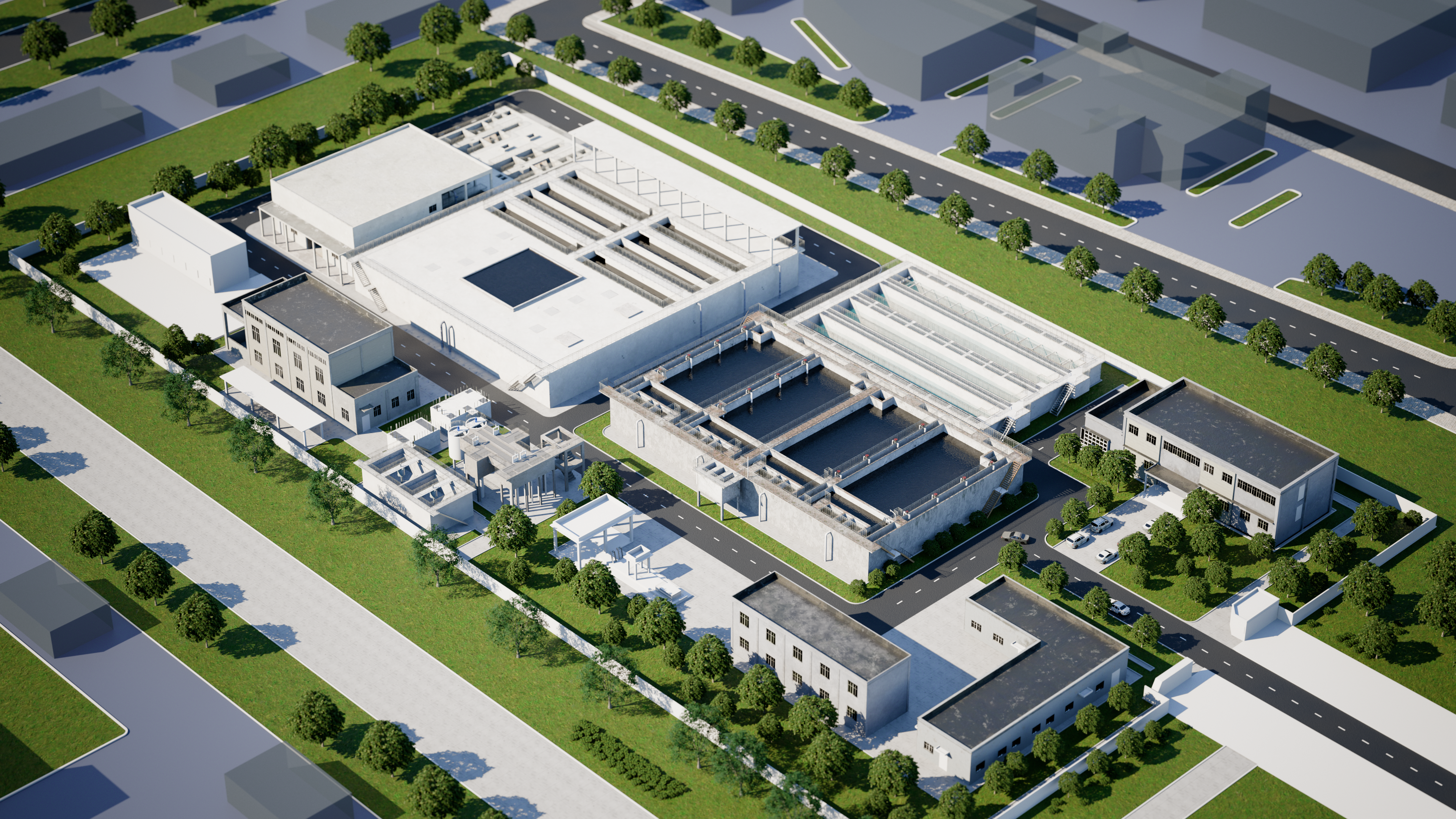
When a municipal sewage treatment plant has a daily treatment capacity of 50,000–150,000 cubic meters, both process stability and operational economy face dual challenges.
This plan is based on AAO (Anaerobic, Anoxic, Aerobic) + MBR (Membrane Bioreactor) or a modified oxidation ditch as the core process route, with the AI Industrial Brain embedded throughout the entire process. The design starting point is to transform traditional “passive response” operation and maintenance into a “proactive prediction” mode, achieving stable effluent compliance and optimal energy balance.
The following technical interpretation is presented according to process units, AI application modules, system architecture, and economic considerations.
-
Process Route and Unit Function Interpretation
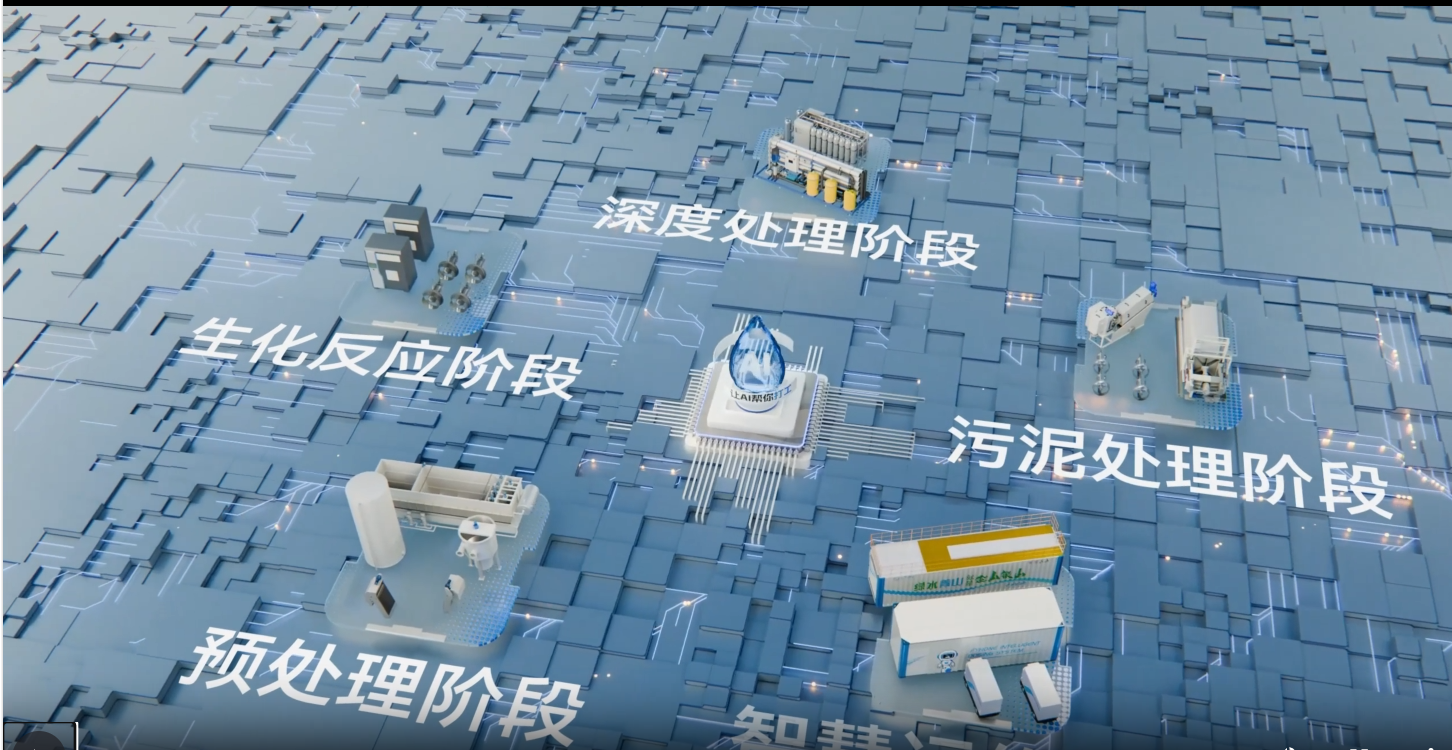
1.1 Pretreatment Stage
- Equipment Configuration:Coarse screen, fine screen, grit chamber.
- Technical Function:Removes large suspended solids and grit to protect subsequent pumps, membrane modules, and precision instruments.
- AI Relevance:Install a water quality sensor array (COD, ammonia nitrogen, pH, flow, turbidity) in the pretreatment stage to provide foundational data for AI predictive models.
1.2 Biochemical Treatment Stage
- Uses AAO + MBR or modified oxidation ditch, both capable of AI integration.
- Anaerobic/Anoxic Tank:Achieves biological nitrogen and phosphorus removal. Phosphorus is released in the anaerobic zone, denitrification occurs in the anoxic zone.
- Aerobic Tank:Degrades COD/BOD through aeration and completes nitrification.
- MBR Membrane Module:Replaces the traditional secondary sedimentation tank, using membrane separation to retain activated sludge, increasing sludge concentration (MLSS up to 8–12 g/L) and reducing footprint.
- Technical Interpretation:AAO + MBR combination achieves high effluent quality (meeting near Class IV standards) and strong resistance to shock loads; the modified oxidation ditch is more suitable for projects with ample land or aiming to reduce membrane investment. Both processes retain AI control interfaces.
1.3 Advanced Treatment and Disinfection for Reuse
- Advanced Treatment:High-efficiency sedimentation tanks, denitrifying deep bed filters, or MBR modules (already included in the biochemical stage) to further remove trace suspended solids and phosphorus.
- Disinfection:Sodium hypochlorite, UV, or ozone.
- Reuse Applications:Landscape water supplementation, municipal greening, industrial circulating cooling water, etc.
-
AI Core Application Modules Technical Interpretation
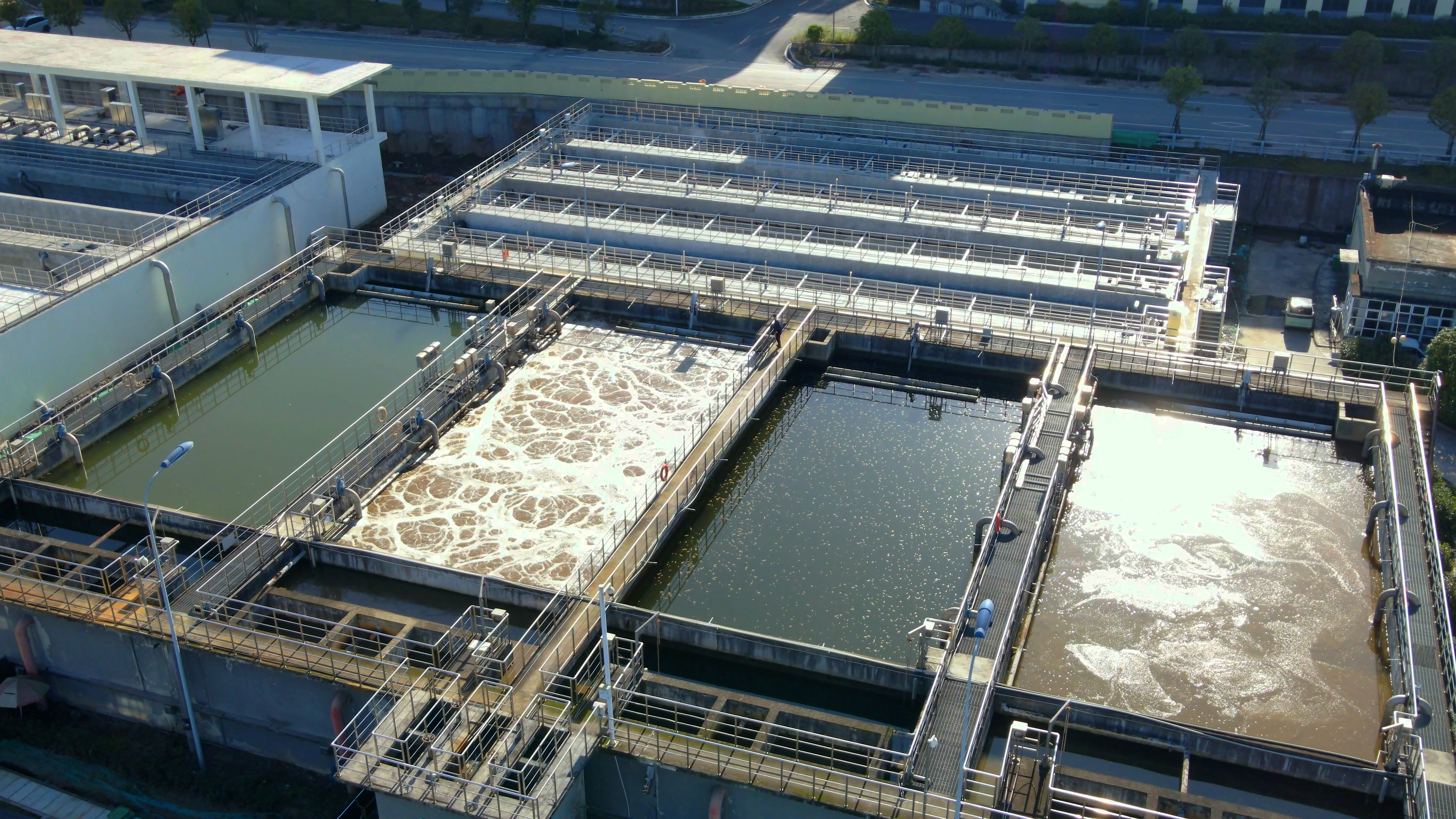
Three AI modules are defined: intelligent aeration control, precise chemical dosing, and water quality fluctuation warning and simulation.
2.1. AI intelligent aeration control
|
project
|
technical content
|
|
Traditional pain points
|
Aeration energy consumption accounts for more than 50% of the plant, manual or PID adjustment lags behind, and excessive aeration or insufficient oxygen supply is common
|
|
AI technical solution
|
Based on neural network algorithms (such as LSTM or RNN), real-time analysis of the change trends of inlet water flow, COD, and ammonia nitrogen, prediction of oxygen demand in the next 8 hours or more, and dynamically adjust the blower frequency or guide vanes
|
|
operation value of
|
Energy saving 10% 20%; prevent excessive aeration from causing sludge aging (DO is controlled within a reasonable range)–
|
Technical Interpretation:The core input for the predictive model is influent load pattern recognition. For example, domestic sewage usually has morning and evening peaks; AI can learn historical data to anticipate oxygen peaks, allowing the blower to reach a reasonable frequency before the load arrives rather than reacting afterward.
2.2. AI Precise Chemical Dosing Control
|
project
|
technical content
|
|
Traditional pain points
|
Add drugs based on experience, and often overdose to ensure compliance.
|
|
AI Solution
|
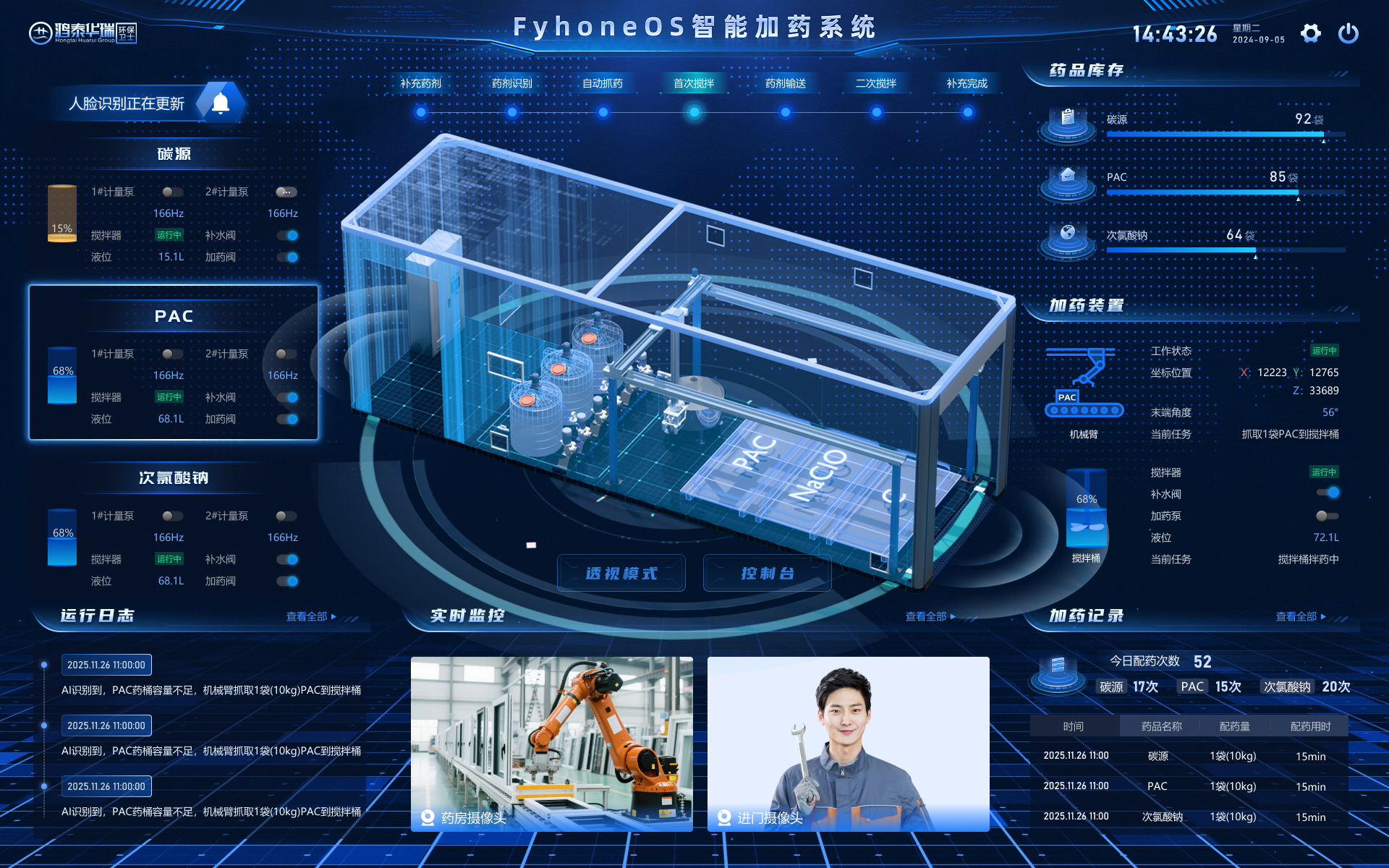
Establish a multi-parameter coupled model. Input parameters such as orthophosphate, influent flow, sludge age, temperature, and pH to automatically calculate the optimal dosing ratio of phosphorus removal agents and carbon sources. Robotic arms + AI vision recognition enable automatic feeding, mixing, and dosing.
|
|
Operational Value
|
Reduces chemical consumption by over 15%, significantly lowers sludge production (due to reduced metal salt floc formation)
|
Technical Interpretation:The model is not simple proportional control but based on stoichiometry and biochemical kinetics. For example, in phosphorus removal, the model calculates hydrolysis forms of aluminum or ferric salts based on influent alkalinity and pH, avoiding overdosing that could lower effluent pH or impair sludge settling.
2.3. Water Quality Fluctuation Warning and Simulation (Digital Twin)
|
project
|
technical content
|
|
Traditional pain points
|
Abnormal upstream emissions (high COD, low pH, toxic substances) are discovered only after entering the biochemical pool, resulting in a high risk of process collapse
|
|
AI technical solution
|
Digital twin technology: Build hydraulic and biochemical models in virtual space that operate simultaneously with the physical plant. When abnormal indicators are detected in the upstream pipe network, the system simulates the response of the biochemical pool 28 hours in advance, and automatically recommends or implements adjustment strategies (such as increasing the reflux ratio, reducing the inflow volume, and replenishing carbon sources)
|
|
operation value of
|
Avoid the risk of process collapse and ensure effluent safety
|
Technical Interpretation:The digital twin combines mechanistic and data-driven hybrid modeling. For routine water quality fluctuations, the data model responds quickly; for extreme shocks (e.g., pH drops below 5), the mechanistic model uses ASM series equations to predict DO, nitrate nitrogen, and ammonia nitrogen trends, providing safe operational recommendations.
3. System Architecture: Sensing → Edge → Platform → Application
- Sensing Layer:Intelligent water quality instruments (online COD, ammonia nitrogen, total phosphorus, total nitrogen, DO, ORP), visual recognition cameras, vibration sensors. Data acquisition frequency ≤ 1 minute.
- Edge Computing Layer:AI edge gateway deployed in the plant control room or local control cabinet.
- Key Feature:Can maintain automatic operation during network outages (local cached models + closed-loop control), with data synchronized to the platform once the network is restored.
- Platform Layer (Cloud):Smart water big data center, supporting multi-plant data aggregation, energy efficiency diagnostics, equipment health assessment, cross-plant benchmarking.
- Application Layer:Mobile app, digital twin dashboard. Operators can remotely monitor key indicators, receive work order notifications, and manually adjust setpoints.
Technical Interpretation:The edge layer ensures reliability. Traditional SCADA can only maintain simple logic during outages, while AI edge gateways can still use local models for prediction and adjustment, meeting continuous operation requirements of sewage treatment plants.
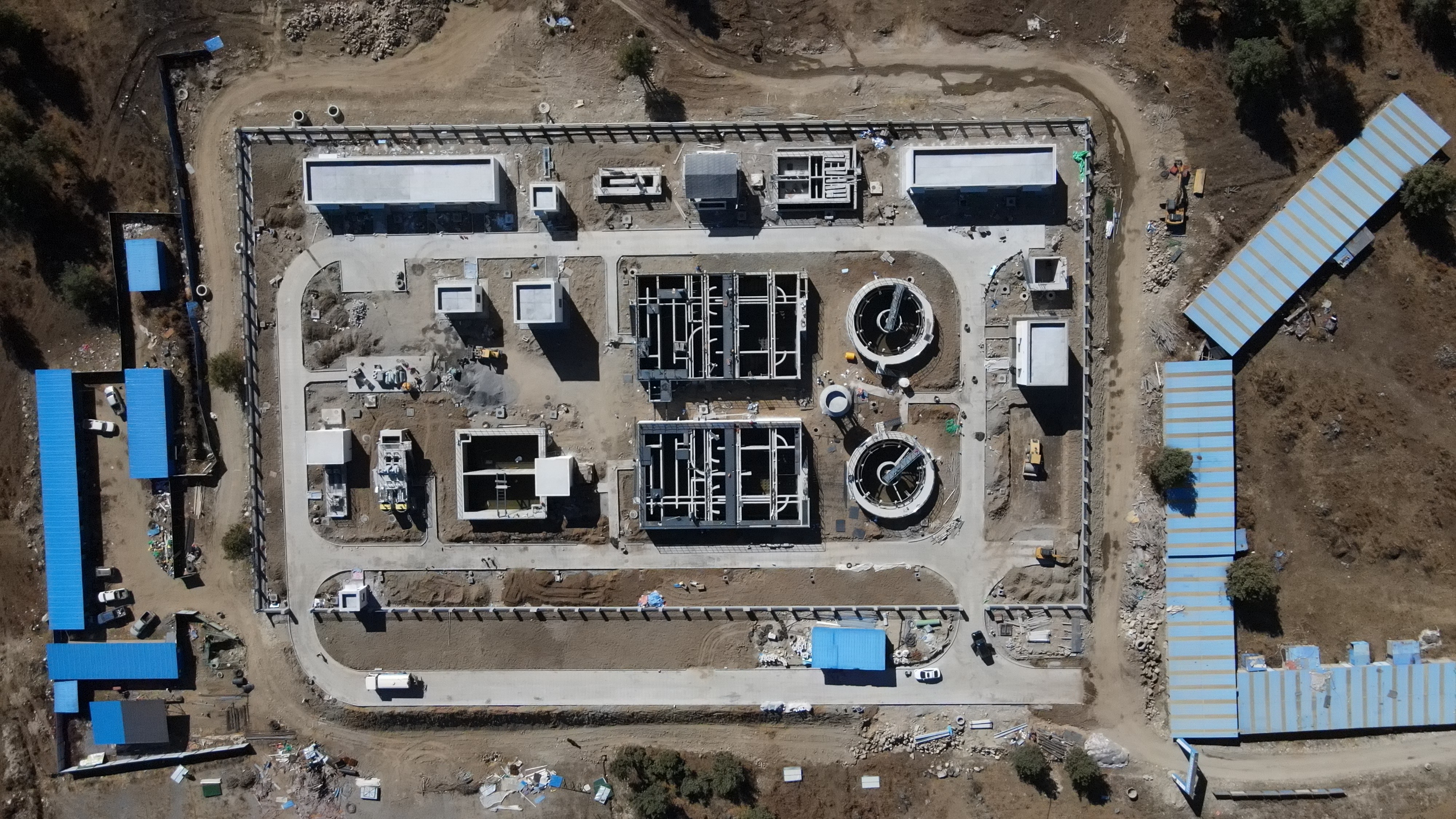
4. Design Considerations for 50,000–150,000 m³/d Scale
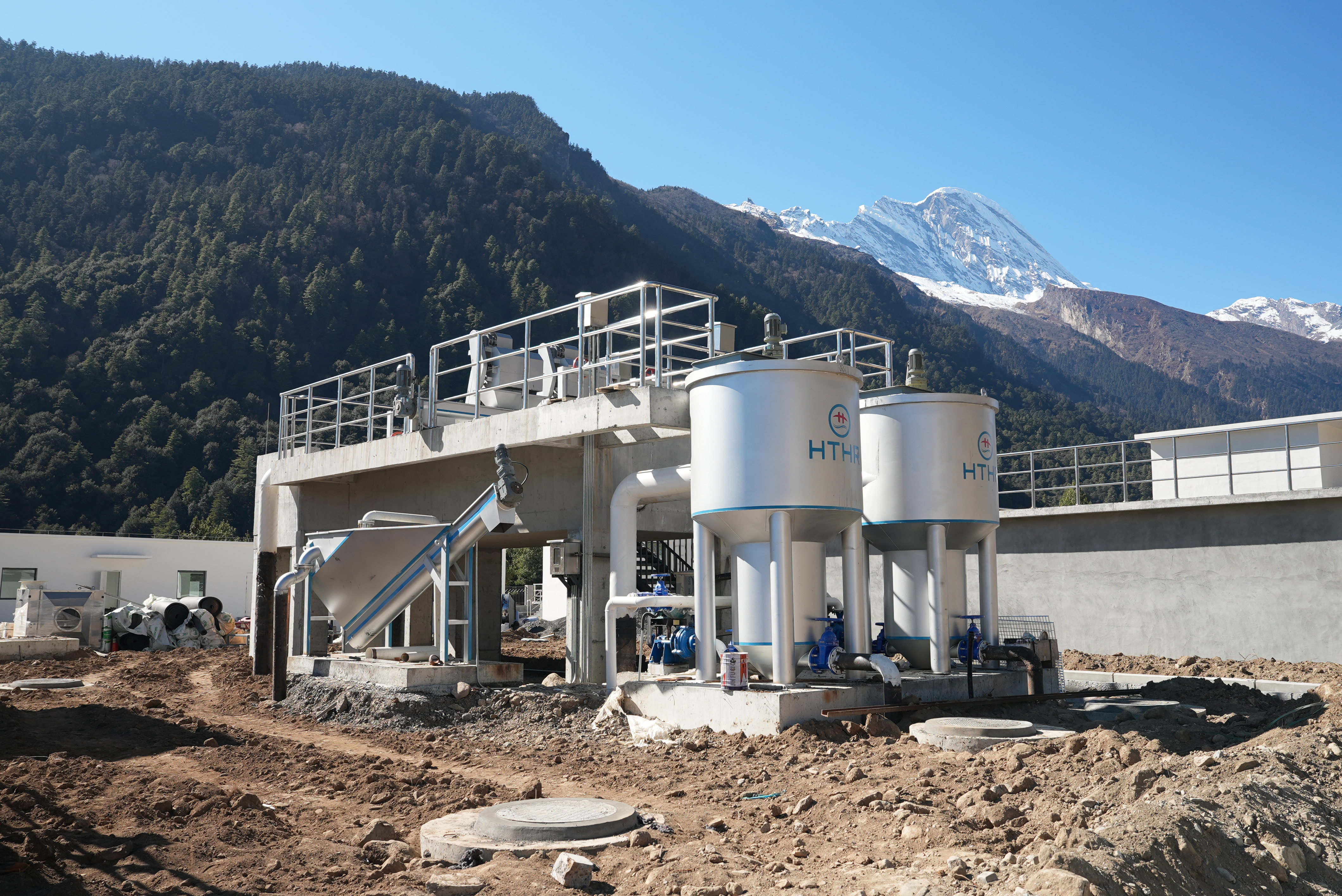
- Load Fluctuation Tolerance:Typically serving 300,000–1 million people with significant daily and holiday fluctuations. AI models must support weekly patterns + weather corrections (combined sewer systems may dilute or flush during rain).
- Parallel Control of Multiple Lines:For multiple parallel biochemical tanks (e.g., four units), AI can independently adjust aeration and return for each, balancing loads.
- Peak-Valley Electricity Adaptation:Within allowable limits, AI aeration control can leverage off-peak electricity for enhanced aeration (when water quality has buffering capacity) to reduce electricity costs further.
5. xpected Benefits
- Operational Cost Reduction:Combined energy and chemical costs reduced by ~15% (based on similar scale project simulations or actual measurements).
- Effluent Compliance Rate:Increased to 99.9%, eliminating exceedances caused by human error.
- Management Efficiency:Inspection labor reduced by 30%, achieving lean management.
Technical Interpretation:Reduced labor does not mean layoffs but frees personnel from routine inspections and manual adjustments, allowing focus on equipment maintenance and in-depth analysis.
6. Common Technical Q&A
Q1:For 50,000–150,000 m³/d, how to choose between AAO + MBR and modified oxidation ditch?
A:For effluent meeting near Class IV and limited land, AAO + MBR is preferred; if existing tanks are oxidation ditches and low-investment retrofitting is desired, modified oxidation ditch with AI control can be used. Both options are supported by Hongtai Huarui.
Q2:How to upgrade old sewage treatment plants without stopping operations?
A:Software: add AI edge control cabinet to optimize aeration, return, and sludge discharge strategies; hardware: add high-efficiency sedimentation units or submerged ultrafiltration membranes. During construction, retrofit one line at a time to maintain treatment capacity.
Q3:Can AI achieve round-the-clock unmanned operation?
A:The goal is “intelligent monitoring, on-demand presence.” AI handles over 95% of routine adjustments (aeration, dosing, return). The system monitors 24/7, only issuing work orders for equipment life warnings or extreme influent shocks beyond automatic adjustment range.
Q4:How does AI ensure effluent stability?
A:Traditional systems adjust reactively after effluent quality deteriorates. This AI solution predicts: using real-time influent data, it simulates biochemical tank status 8 hours ahead and adjusts parameters proactively, eliminating water quality fluctuations.
Q5: Does adding AI and sensing devices significantly increase construction costs?
A: In the short term, there is some investment in automated instruments and intelligent control cabinets; however, from a lifecycle cost (LCC) perspective, for a 50,000-ton/day plant, overall energy consumption can drop by more than 15%, and the incremental investment can be recovered in 1.5–2 years through savings on electricity, chemicals, and labor.
Q6: How is data security ensured?
A: It uses an edge computing + private cloud architecture. Core control logic is executed in the local AI control cabinet, so the equipment continues to operate normally even if the external network is interrupted. All data transmissions are commercially encrypted and comply with national smart city infrastructure security standards.
This solution is not simply “adding a computer to a wastewater treatment plant,” but a deep integration of real process mechanisms with machine learning predictions.
For municipal wastewater treatment plants with a capacity of 50,000–150,000 m³/day, operational challenges are more common than unique—fluctuating influent, energy consumption weight, and chemical redundancy are widespread pain points.
By deploying AI-based intelligent aeration, precise chemical dosing, and digital twin early warning systems, wastewater treatment plants can shift their operational mode from “reactive remediation” to “proactive prediction,” achieving measurable cost reduction and efficiency improvement without changing the main process.


 hthrjt2017@gmail.com