Technical Solution for the Full Process of Printing and Dyeing Wastewater Treatment — In-depth Analysis for 500–2000 m³/day Scale
- release date: 2026-05-12 14:37:19
- author: Hongtai Huairui
- Reading: 851
- key words: Printing and dyeing wastewater treatment / Printing and dyeing wastewater treatment solutions / Printing and dyeing wastewater treatment projects / Hongtai Huarui / Medium-sized printing and dyeing enterprises / Zero discharge of printing and dyeing wastewater / Reuse of printing and dyeing reclaimed water / Disposal of printing and dyeing sludge
Printing and dyeing wastewater has long been regarded as the "hard bone" of industrial wastewater due to its high COD, high pH, intense color, and extremely complex composition, posing significant challenges for treatment. For medium-sized printing and dyeing enterprises with a daily treatment volume of 500–2000 m³, the core concerns for managers and engineers are how to strictly meet the "Textile Dyeing and Finishing Industry Water Pollutant Discharge Standard" (GB 4287) while effectively controlling costs and achieving reclaimed water reuse.
Hongtai Huarui, relying on years of engineering experience, has launched a full-process solution for this scale, comprising “physicochemical pretreatment + enhanced biological treatment + deep decolorization and reuse.” This article systematically analyzes water quality characteristics, process selection, key equipment, and cost reduction strategies.
1. Sources and Characteristics of Printing and Dyeing Wastewater
Printing and dyeing wastewater is a mixture of effluents from different processes. Accurately identifying the characteristics of each effluent is a prerequisite for process design.
|
Wastewater type
|
Characteristics
|
Treatment Challenges
|
|
Sizing wastewater
|
About 10% of total volume, COD up to several thousand to tens of thousands mg/L, containing starch and PVA
|
Poor biodegradability of PVA; requires separate pretreatment or enzyme addition
|
|
Scouring wastewater
|
Strongly alkaline, pH 10–12, containing pectin and wax
|
Must be neutralized before biological treatment
|
|
Dyeing wastewater
|
Accounts for 60–70% of total volume, COD 800–3000 mg/L, color 500–3000 times
|
Fixation rate of reactive dyes only 70–80%; free dyes are the main source of color
|
|
Bleaching wastewater
|
Contains residual H₂O₂ or NaClO
|
Oxidants can kill activated sludge; require pre-reduction or sufficient storage for decomposition
|
2. Core Process Route: Three-Stage Full Process
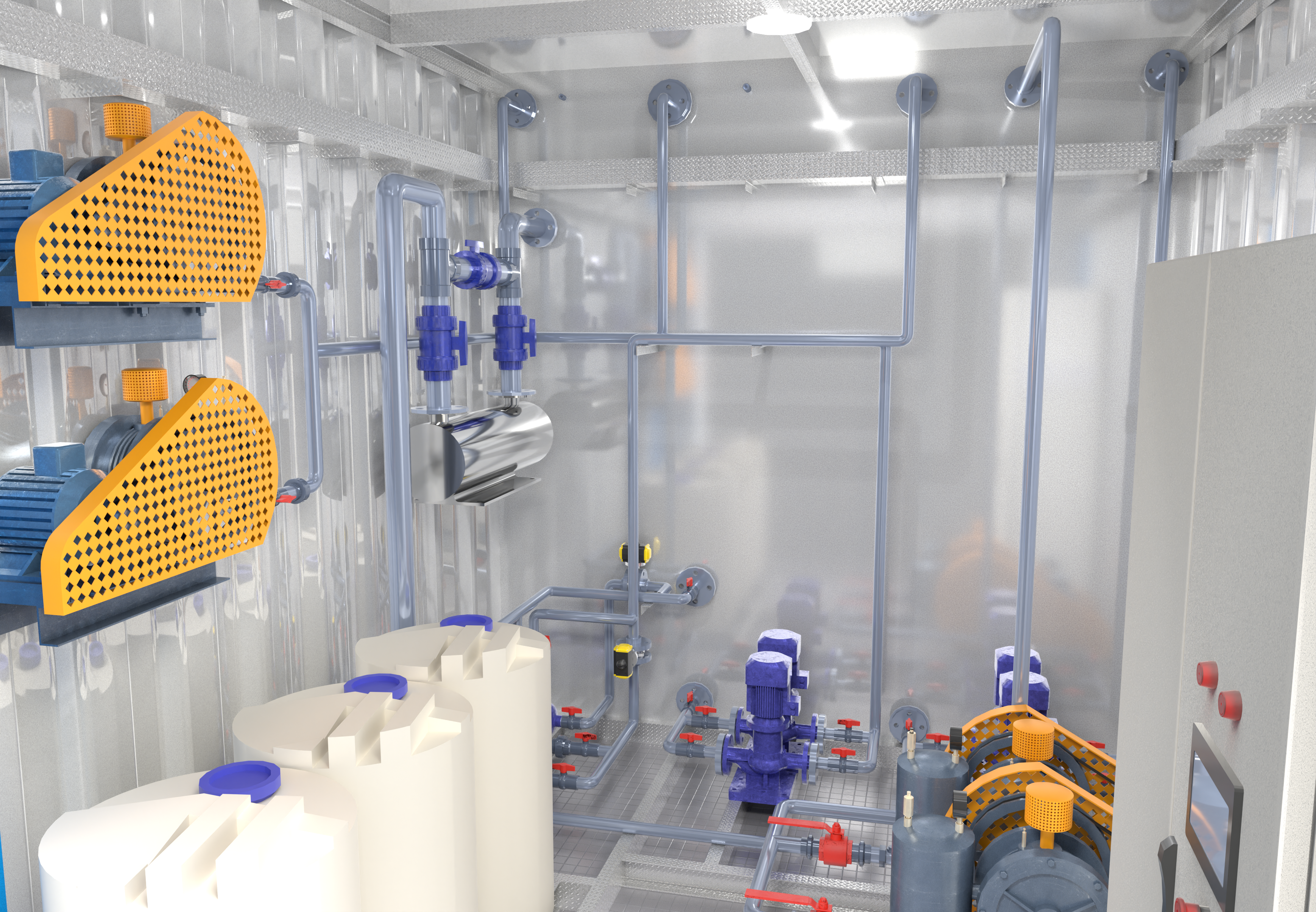
For 500–2000 m³/day scale, Hongtai Huarui recommends the following mature process combination:
|
Treatment Stage
|
Recommended Process
|
Removal Target
|
Treatment Efficiency
|
|
pretreatment
|
Screening + Equalization Tank + DAF Flotation | SS, floating oil, insoluble dyes
|
SS, floating oil, insoluble dyes
|
SS removal ≥ 60%
|
|
Biological Treatment
|
Hydrolysis-Acidification + Aerobic (Contact Oxidation) + MBR
|
COD, BOD, small molecule organics
|
COD removal 85–95%
|
|
Deep Decolorization
|
Ozone Oxidation / Fenton Oxidation
|
Residual color, refractory organics
|
Color removal ≥ 90%
|
|
Reuse Treatment
|
UF + RO Dual-Membrane
|
Salts, trace organics
|
Desalination ≥ 95%, reuse rate 70–80%
|
2.1Pretreatment — Conditioning and Load Reduction
Screening and Equalization Tank
Mechanical screens intercept lint and fiber debris. Recommended hydraulic retention time (HRT) in the equalization tank is 8–12 h, with stirring for uniform water quality and quantity.
Cooling and Heat Recovery
Influent temperature often reaches 40–65℃; it should be cooled to 30–35℃ via plate heat exchangers for optimal biological treatment while recovering heat for production water heating. Heat recovery benefit per ton of water: 0.3–0.8 RMB.
Coagulation Flotation (DAF)
Addition of PAC/PAM flocculates suspended dyes and floating oil, removed by dissolved air flotation. For wastewater dominated by dispersed dyes, this step can remove 40–60% of color, significantly reducing biological load.
2.2 Enhanced Biological Treatment — The Heart of Organic Removal
Hydrolysis-Acidification
For large molecule dyes, the B/C ratio is typically below 0.2. Hydrolytic acidification bacteria under facultative conditions break long-chain molecules, raising the B/C ratio to 0.3–0.4. Recommended HRT ≥ 10 h, sludge concentration 4–6 g/L.
Aerobic Biological Treatment (Contact Oxidation / MBR)
Contact oxidation is easy to operate, suitable for enterprises with limited staff. MBR replaces secondary sedimentation with membrane separation, achieving effluent SS < 5 mg/L, MLSS 6–12 g/L, saving 30–40% space and providing strong shock resistance.
2.3Deep Treatment — Dual Guarantee of Decolorization and Reuse
Advanced Oxidation
Ozone or Fenton generates ·OH radicals that directly destroy azo and anthraquinone chromophores for deep decolorization. To prevent "recoloring," oxidation should be at the final stage with sufficient reaction time.
Dual-Membrane (UF + RO)
For enterprises requiring water reuse, ultrafiltration removes suspended solids, reverse osmosis reduces salinity to <100 μS/cm, with overall recovery rate 70–80%. In water-scarce regions, investment payback is usually 3–5 years.
3. Recommended Key Equipment Configuration (500–2000 m³/day)
Based on project data, Hongtai Huarui recommends the following equipment (final specifications should be calculated based on measured water quality):
|
Equipment
|
Suggested Specification
|
Main Function
|
|
Equalization Tank Mixer
|
2.2–7.5 kW, variable frequency control
|
Homogenization, prevent sedimentation
|
|
Plate Heat Exchanger
|
Heat exchange area calculated for ΔT = 15℃
|
Cooling below 35℃, heat recovery
|
|
High-Efficiency Shallow DAF
|
Surface load 4–6 m³/(m²·h)
|
Remove floating oil, insoluble dyes
|
|
Hydrolysis-Acidification Tank
|
HRT 8–16 h, sludge ≥ 4 g/L
|
Increase B/C ratio to 0.3+
|
|
MBR Membrane Bioreactor
|
Membrane flux 10–15 LMH, MLSS 6–12 g/L
|
Efficient COD removal, effluent SS < 5 mg/L
|
|
Ozone Contact Tower
|
Ozone dose 30–80 mg/L
|
Oxidize chromophores, thorough decolorization
|
|
Fenton Reaction Tank
|
H₂O₂ 200–500 mg/L
|
Supplemental removal of refractory organics
|
|
UF + RO
|
UF recovery ≥ 90%, RO ≥ 75%
|
Reclaimed water, remove salts and trace organics
|
|
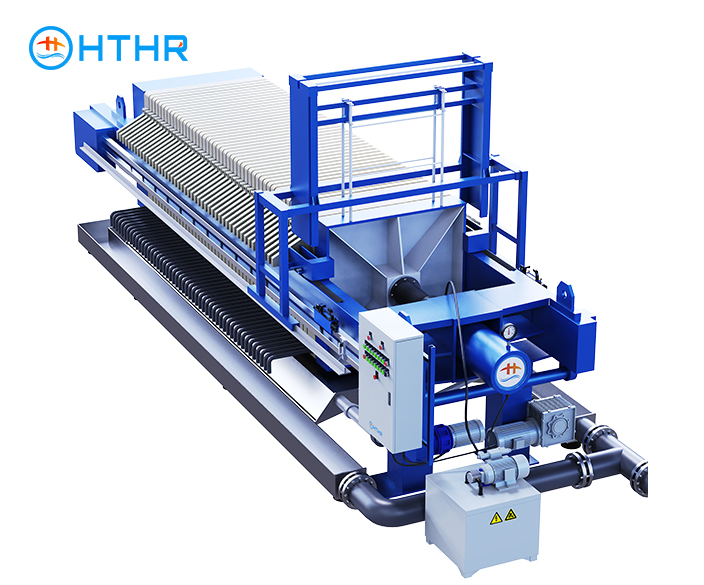
Plate and Frame Filter Press
|
Pressure 0.6–0.8 MPa
|
Sludge dewatering
|
4.Three Core Strategies for Reducing Operating Costs 
- Separate Collection and Targeted Treatment
High-concentration sizing wastewater (COD > 10,000 mg/L) and low-concentration rinse water (COD < 300 mg/L) are collected separately. The former is pretreated before joining the main process, the latter is treated simply and reused directly, avoiding raising overall concentration and significantly reducing chemical and energy consumption.
- Heat Recovery — Turning Waste into Resource
For 1000 m³/day at 50℃ influent, about 174 GJ/day heat can be recovered, saving 7–8 tons/day of steam and 200,000–300,000 RMB annually. Plate heat exchanger investment payback is usually less than 2 years.
- Intelligent Dosing — Reducing Waste
Online COD and color meters at the equalization tank outlet and biological effluent, controlled via PLC, adjust PAC/PAM and ozone dosing. Coagulant consumption can be reduced by 15–25%, eliminating crude dosing.
5. Industry Trend: Towards Zero Discharge and Resource Utilization
With the deepening “dual carbon” policy, wastewater treatment is shifting from simple compliance to resource recycling:
- Salt Recovery: Electrodialysis (EDR) can concentrate NaCl to 60–80 g/L for reuse in dyeing, saving hundreds of thousands of RMB annually.
- Deep Heat Utilization: Organic Rankine Cycle (ORC) generation or heat pumps enhance heat quality for plant heating and process heating.
- Sludge Reduction and Resource Recovery: Thermal hydrolysis + anaerobic digestion reduces sludge volume while producing biogas for power, reducing disposal costs.
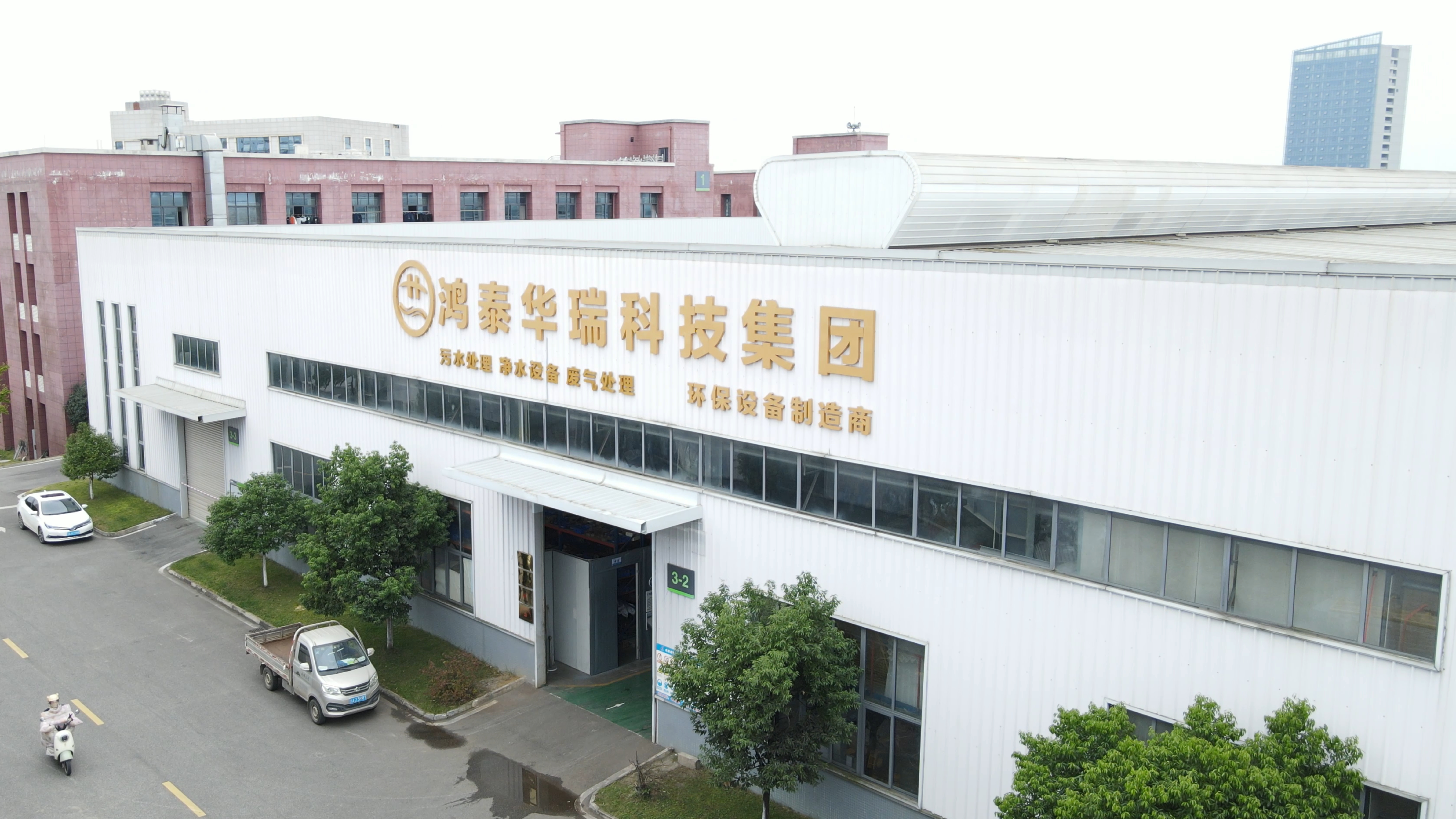
6. Hongtai Huarui Technical service commitment
As a technical service provider specializing in printing and dyeing wastewater treatment, Hongtai Huarui adheres to the principle of “comprehensive water quality analysis first, pilot verification in engineering.”
We provide full-chain services from sampling and testing, process package design, equipment integration, installation, commissioning to operational training, ensuring stable long-term operation and compliance with national and local standards.
This solution is based on Hongtai Huarui’s internal technical data from numerous printing and dyeing wastewater treatment projects. For detailed customized process design, please contact us.


 hthrjt2017@gmail.com