hthrjt2017@gmail.com
Safety production in sewage treatment plants needs urgent attention
- release date: 2022-09-06 09:50:18
- author: Hongtai Huairui
- Reading: 4769
- key words: Sewage treatment plant, production safety
Hongtai Huarui Technology Group welcomes your visit. We have been dedicated to the environmental protection and governance industry for over a decade! We look forward to a cooperation with you!


+86 19102876179 +86 400-669-0860

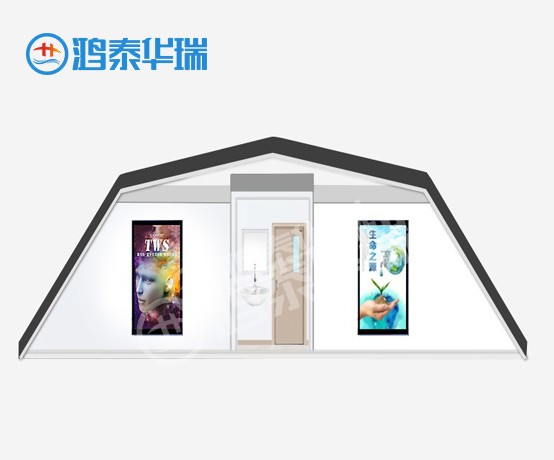
Click to learn about the product:Smart and environmentally friendly toilet customization
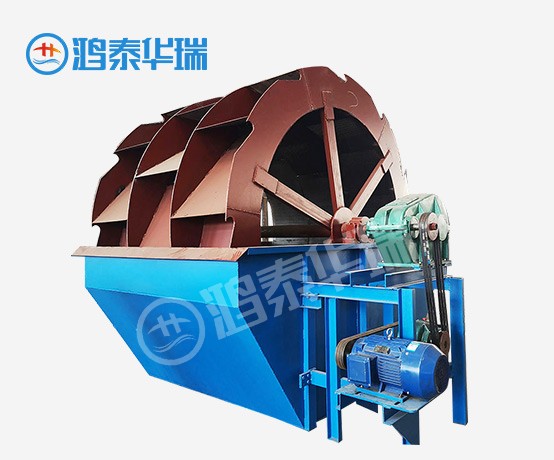
Click to learn about the product:Mobile bucket wheel sand washer
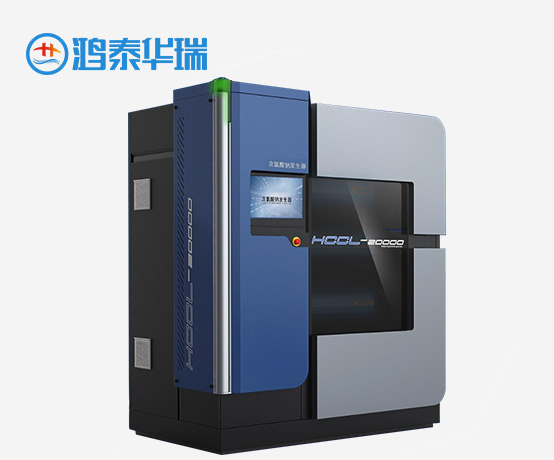
Click to learn about the product:Large sodium hypochlorite generator

Click to learn about the product:RO reverse osmosis water purification equipment
On June 16, an explosion occurred in the sewage treatment workshop of a company in Qinchuan Fine Chemical Park, Lanzhou New District, Lan 'Zhou City, Gansu Province, casting a haze over this safe production month.
According to reports, the accident injured 8 people and killed 6 others. Preliminary analysis revealed that the steam may cause high temperatures and excessive pressures in the enclosed sewage treatment room, which may cause an explosion.
In addition to explosion accidents, poisoning accidents occur frequently in sewage treatment plants. Statistics from the "Statistical Analysis and Countermeasures Research on Accidents in Sewage Treatment Plants in my country" show that in the past 25 years, poisoning and suffocation accidents accounted for 71% of the accidents occurring in sewage treatment plants in my country, ranking first. This means that among sewage plant accidents, about 3 out of 4 accidents are caused by poisoning and suffocation.
Safety accidents occur frequently in sewage treatment plants, and production safety needs urgent attention.
Frequent accidents in sewage treatment plants
The reporter sorted out and found that from June last year to the present, at least 13 sewage treatment plant safety accidents have occurred in just one year, resulting in 45 deaths and causing irreparable tragedy.
Take the major typical accidents in sewage treatment plants that have occurred in recent years as an example. On June 13, 2021, in the biological contact oxidation process of the sewage treatment station of Sichuan Yifeng Food Co., Ltd. located in Qingxia Street, Dayi County, Chengdu City, Sichuan Province, a limited space poisoning and suffocation accident occurred while preparing to pump sewage, resulting in 6 deaths and direct economic losses of more than 5.42 million yuan.
The investigation found that when preparing for pumping sewage in the contact oxidation room, the operators entered a relatively enclosed space where toxic and harmful gases such as hydrogen sulfide escaped and accumulated without turning on the exhaust fan for ventilation or taking personal protective measures, and inhaled hydrogen sulfide and other toxic and harmful gases caused poisoning and suffocation, and the blind rescue workers caused the accident to expand.
In the early morning of July 18, 2018, a poisoning accident occurred during equipment maintenance by staff members of Tanhu Sewage Treatment Plant in Yuekou Town, Tianmen City, Hubei Province, causing poisoning of five people. Although they were sent to the hospital for treatment as soon as possible, unfortunately, 4 people were killed and 1 was injured, with a direct economic loss of approximately 4.3 million yuan.
The investigation found that during the company's dredging operations, toxic and harmful gases such as hydrogen sulfide escaped during sludge discharge, dilution, and stirring in the emptying pool and gathered in the operation area. The operators died of poisoning due to inhalation of toxic and harmful gases such as hydrogen sulfide. In addition, the on-site rescue personnel carried out rescue without knowing the harmful and toxic factors on the scene and taking safety measures without wearing protective equipment, resulting in an increase in casualties caused by hydrogen sulfide poisoning.
Looking forward, on the evening of September 29, 2017, a limited space poisoning and suffocation accident occurred at the Huamagou Emergency Sewage Treatment Station in Shunyi District, Beijing City, killing three people. The investigation results showed that the cause of the accident was that a worker worked illegally in the sludge pond and operated improperly, causing poisoning and suffocation. It is worth mentioning that in this accident, two other workers were also poisoned and suffocated after improper rescue.
It can be seen from sorting out that the occurrence of sewage treatment plant accidents has seasonal characteristics. The incidence rate is higher from May to September when the temperature is higher, and the incidence rate is lower from October to April of the following year when the temperature is lower. Moreover, poisoning accidents will occur in closed or relatively closed places such as sewage wells, digestion ponds, sludge ponds, and cable ditches. More importantly, a poisoning and suffocation accident is often the result of multiple causes. Blind rescue can easily increase the number of casualties.
Compared with poisoning accidents, although explosion accidents occur less frequently, the harm caused cannot be ignored.
At about 20:40 on July 11, 2020, an explosion occurred in the hydrolysis acidification workshop of the Sewage Treatment Plant in the Fluorine Industry Development Zone of Fuxin City, Liaoning Province. The accident caused glass cracks in the sewage treatment plant and some surrounding factories and residential buildings. Although no major property damage, death or serious injury were caused, 2 slightly injured people were detained in the hospital for treatment, and 15 slightly injured people were detained in the hospital for observation.
The explosion accident at a sewage treatment plant in Ruili City, Yunnan Province in 2017 was not so lucky.
At about 15:00 on December 22, workers at the sewage treatment plant under construction in Wanding Town were painting anti-corrosion materials in the anaerobic pool. Four workers were trapped at the scene and had no vital signs when they were rescued.
There are countless similar safety incidents.
Why do sewage treatment plants have frequent accidents
The bloody and tragic cases are before us, which has to arouse our deep thoughts. Why do sewage treatment plants have frequent accidents?
The reporter learned that the problems exposed by frequent accidents in sewage treatment plants include the following points: First, the main responsibilities of enterprises for production safety are not implemented, the safety risks of operations in limited spaces are unclear, the education and training of operators are not in place, and the safety awareness is weak.
Secondly, the staff did not carry out limited space maintenance operations in accordance with the operation specifications, and the operation site was not equipped with ventilation, testing, personal protection and emergency rescue equipment.
In addition, there are also cases where blind rescue under unexpected circumstances leads to increased casualties, construction units fail to fulfill their responsibilities for unified and coordinated management of production safety, there are loopholes in safety supervision in some industry departments, and the basic management of limited space operations in the industry is not solid.
So, why do most of the limited space operation accidents occur in sewage treatment plants? In this regard, the reporter interviewed Jiang Hao, a staff member of the safety department of Beijing Urban Drainage Group Co., Ltd.
The source water of the sewage plant comes from urban domestic sewage and industrial wastewater. It is already in an oxygen-deficient state when transported in the municipal pipe network. During the treatment process, toxic and harmful gases are more likely to be produced. rdquo; Jiang Hao told reporters that although these toxic and harmful gases are diverse and complex in composition, they can be divided into three categories: suffocation gases, corrosive gases and flammable and explosive gases according to the different methods of harm.
Toxic gases such as hydrogen sulfide, hydrogen cyanide, and carbon monoxide can cause harm to other tissues and organs in the human body through human respiratory organs. These gases inhibit the oxygen exchange ability of internal tissues or cells in the human body, causing hypoxia in the body tissues and causing suffocation. Poisoning, therefore it is also called asphyxiating gases.
Jiang Hao told reporters that most accidents in limited space operations in sewage treatment plants are caused by poisoning or hypoxia and suffocation. Taking hydrogen sulfide as an example, there are two main ways to produce hydrogen sulfide in sewage treatment plants: one is that sulfate-reducing bacteria (SRB) in sewage reduce sulfate to form H2S at extremely low oxidation-reduction potential; the other is that certain sulfur-containing organic compounds are hydrolyzed to produce hydrogen sulfide. Therefore, poisoning incidents are prone to occur when staff enter areas with high hydrogen sulfide concentrations such as intake grilles and submersible pump rooms.
Corrosive gases are generally gases produced by disinfection processes, such as chlorine, ozone, and chlorine dioxide, which can corrode the human respiratory system.
Inflammable and explosive gases, such as methane, are mixed with air in a certain proportion. When exposed to open flames, they can cause combustion or even explosion, causing harm.
Mentioning the possible causes of fires and explosions in sewage treatment plants, Jiang Hao said that the fire of a transformer may also cause an explosion. If the ambient temperature of the transformer equipment is high or there is a lack of maintenance and maintenance, sparks generated and ignited organic gases may cause explosion.
In addition, some processes in the sewage treatment process require the use of flammable and explosive chemicals. Inadequate management of dangerous chemicals may also cause fires and explosions.
How to prevent safety accidents in sewage treatment plants
Disasters arise in sudden situations, and disasters arise in subtle ways. Tragedy after tragedy has left us painful lessons and sounded the alarm for safe production. We must prevent subtle changes before they occur.
Toxic and harmful gases are usually mixed together, so special attention should be paid to ventilation and fire prevention. Toxic and harmful gases must be collected and treated before they meet the standards before they can be discharged into the atmosphere.& rdquo; Jiang Hao suggested that the organic gas generated by sewage treatment plants must be monitored and inspected regularly to detect or predict such accidents in advance. For example, installing a gas sensor will alarm if the gas leaks or reaches a certain concentration.
In addition, attention must also be paid to standardized management. It is necessary to strictly implement safety operating procedures, such as for operations in limited spaces. The key point is to strengthen on-site safety management and control. It is necessary to ensure ventilation first, testing later, and operation again, and strengthen the safety education and training of operation leaders, guardians, operators in daily work. Emergency rescue personnel. Strictly control outsourcing units.
Safety operating procedures are formulated to ensure safe production. They are safety operating procedures formulated based on the production nature, equipment characteristics and process technical requirements of the enterprise, combined with specific conditions and a large amount of operating experience. They are important rules to guide employees in safe production and are also The most powerful weapon to prevent production safety accidents. So, in actual operation, are the professional judgment and operating procedures of operators also an important part of production safety?
To this, Jiang Hao gave a positive answer. ldquo; In the actual operation process, operators strictly implement various safety operating procedures of the sewage treatment plant, which can greatly avoid the occurrence of production safety accidents. rdquo;
In order to further promote all regions, units and the public to deeply learn lessons from limited space operation accidents and effectively prevent and contain limited space operation accidents, in 2020, the Emergency Management Department organized the compilation of the "Limited Space Operation Safety Guidance Manual" to identify safety risks in limited spaces, safety protection equipment and facilities, and safety management measures.(Including safety management systems, management ledgers, special safety training for relevant personnel, etc.), investigation of major accident hazards, emergency rescue and other aspects provide operating guidelines for production and business units and employees to operate in limited spaces.
At the same time, local standards for safe operation specifications for limited space operations have been successively introduced across the country, and legal responsibilities for violating limited space operations regulations have been clarified.
In April this year, the Ministry of Ecology and Environment established a leading group for production safety, requiring that the concept of safety development be integrated into all areas and the entire process of ecological and environmental protection work, effectively carry out safety prevention work in the process of pollution prevention and control, and fulfill ecological and environmental protection. Continue to move forward on the basis of supervision and management responsibilities and promote the formation of a work pattern that collaborates to promote production safety and ecological and environmental security.
Previous Article:No more
Next Article:This article explains in detail the prin...
Click to learn about the product:Smart and environmentally friendly toilet customization
Click to learn about the product:Mobile bucket wheel sand washer
Click to learn about the product:Large sodium hypochlorite generator
Click to learn about the product:RO reverse osmosis water purification equipment
Environmental Protection Information
Recommended Products