Malaysia's sewage problem does not lie in whether it has infrastructure, but whether it can adapt to reality.
- release date: 2026-03-17 15:03:17
- author: Hongtai Huairui
- Reading: 1051
- key words: Malaysia / Sewage Management / Wastewater Treatment / Decentralized Wastewater Treatment / Intelligent Integrated Equipment / Fyhone AI System / Reclaimed Water Reuse / RO Reverse Osmosis / UV Disinfection / IWK / Indah Water Konsortium / National Water Services Commission / SPAN / Rural Wastewater / Municipal Wastewater / Wastewater Treatment Cost / Wastewater Treatment Upgrading
Malaysia's sewage governance is more structured than most people assume. The Sewerage Services Act 1993 centralised federal oversight. Indah Water Konsortium (IWK) operates over 7,000 public sewage treatment stations and 20,000 km of sewers. The national regulator SPAN oversees capital investment approval.
On paper, the system holds. In practice, three gaps continue to widen.
Gap 1: Rural and peri-urban areas are structurally excluded
IWK's mandate covers Peninsular Malaysia, but not Sabah and Sarawak. Beyond jurisdiction, decentralised areas — smallholdings, kampung clusters, new townships — operate on septic tanks with near-zero maintenance compliance. Untreated discharge flows directly into waterways, the same waterways that feed 98% of the country's freshwater supply.
The problem isn't the absence of regulation. It's treatment infrastructure that was never designed to reach these areas in the first place.
Gap 2: Fixed processes fail variable influent
Municipal wastewater isn't consistent. Seasonal rainfall, upstream industrial discharge, and population density shifts all alter influent quality — sometimes within hours. Conventional treatment plants run fixed biological parameters. When influent changes, effluent quality drifts, and phosphate, nitrate, and suspended solids exceed regulatory limits under the Environmental Quality (Sewage) Regulations 2009.
Regulations of 2009.
Gap 3: Tariffs don't cover costs — so upgrading is structurally difficult
IWK's average monthly tariff sits at RM2–8. Actual service delivery costs around RM17. The gap is real, and it compounds: underfunded operations defer maintenance, deferred maintenance reduces treatment quality, and reduced quality creates the compliance failures that require expensive remediation.
What the technology layer needs to address
Given these structural conditions, effective solutions in Malaysia need to do three things: deploy without major civil works, adapt to variable influent without constant operator intervention, and produce effluent clean enough to reuse — not just discharge.
Solution 1
Intelligent Integrated Wastewater Treatment Unit (Fyhone AI System)
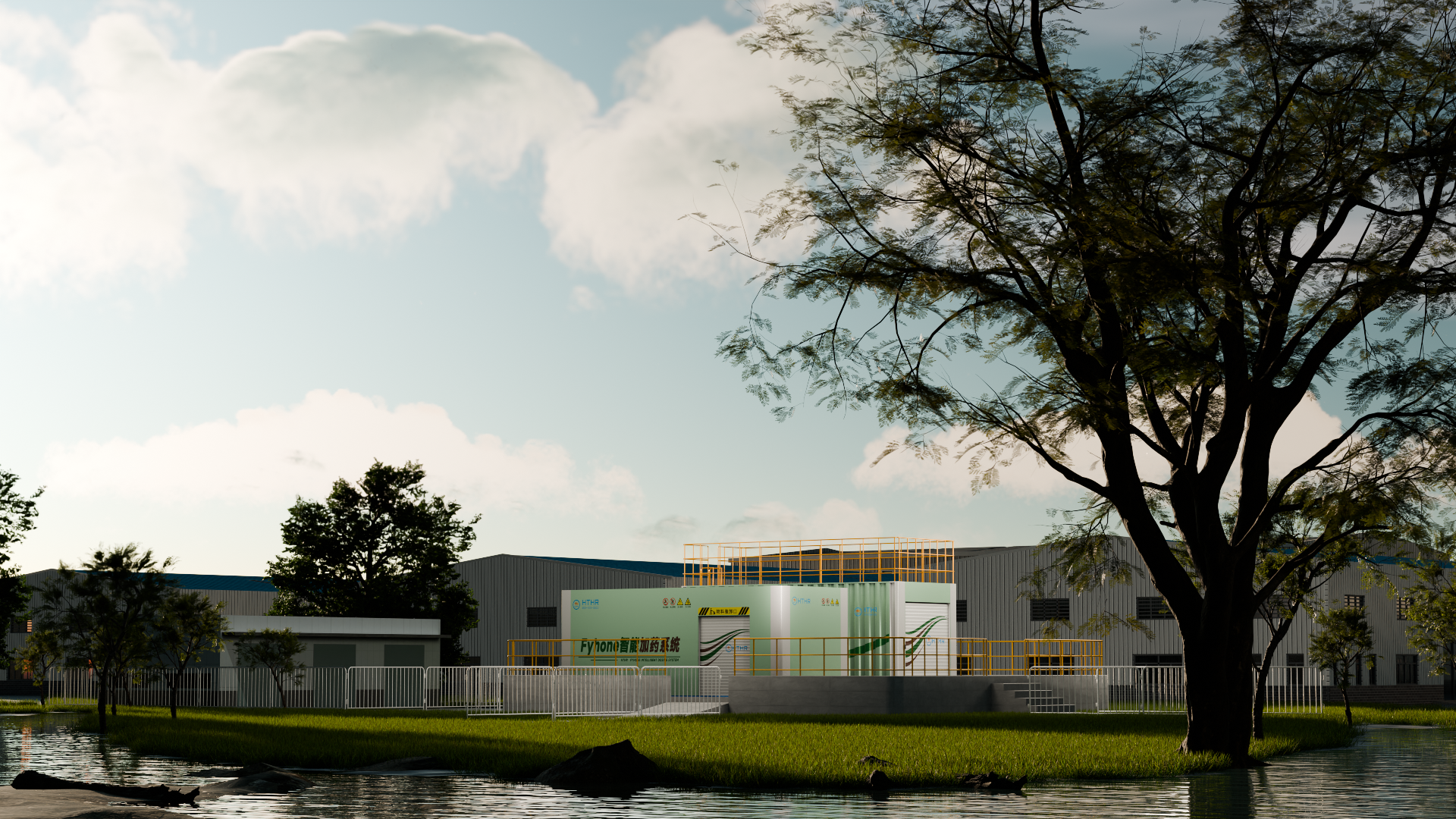
The core problem in decentralised treatment isn’t mechanical — it’s adaptive. The Fyhone AI system continuously monitors incoming water quality and automatically adjusts biological treatment parameters. No fixed process, no manual reconfiguration. The unit is modular, factory-prefabricated, and deployable on-site without excavation — addressing rural coverage gaps where pipeline networks don’t exist and O&M staffing is limited.
Solution 2

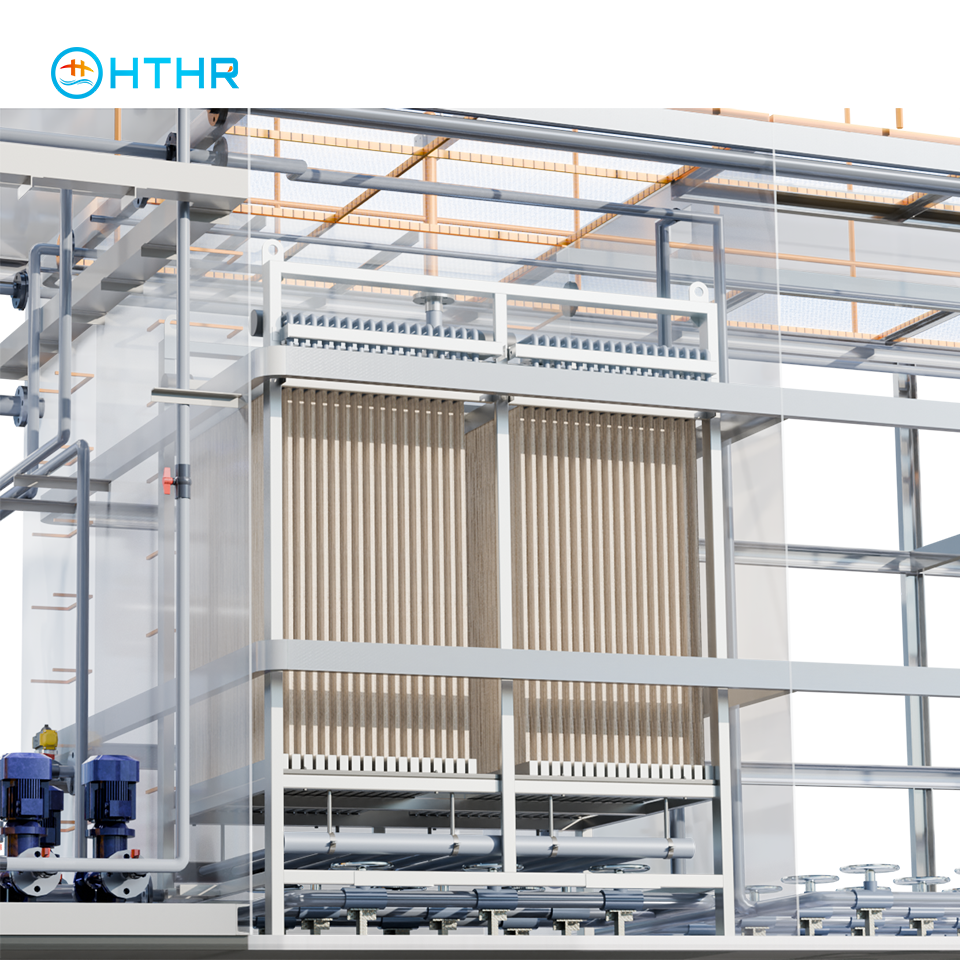
RO Membrane Filtration + UV Disinfection
Secondary-treated effluent that meets discharge standards still contains dissolved solids, residual heavy metals, and microbial load. RO membranes remove 95%+ of dissolved contaminants and ionic pollutants. UV disinfection inactivates bacteria, viruses, and protozoa without chemical addition. Together, the system produces reclaimed water suitable for cooling, irrigation, or process reuse — converting a disposal cost into a recoverable resource. For municipalities managing tight water budgets, this is a practical path toward lower long-term operational expenditure.
Malaysia’s 12th Malaysia Plan explicitly targets water sector reform and sustainable resource management. The regulatory baseline — IWK’s operating mandate, SPAN’s oversight role, the 2009 effluent standards — is already in place. The gap is at the technology layer: treatment systems that can operate adaptively at distributed scale, and deep-treatment infrastructure that enables reuse rather than discharge.
Data references: IWK Annual Report, Environmental Quality Act 1974, Sewerage Services Act 1993, 12th Malaysia Plan (2021–2025), DOE Malaysia effluent standards.


 hthrjt2017@gmail.com