Hongtai Huarui Technology Group welcomes your visit. We have been dedicated to the environmental protection and governance industry for over a decade! We look forward to a cooperation with you!

National Service Hotline :400-669-0860
  • Follow WeChat
  • Follow Douyin
Papermaking wastewater reuse and treatment project of a company in Ningbo City
  • Release date: 2022-08-19 17:23:00
  • Author: 鸿泰华瑞
  • Reading: 5242

  • Key words: Ningbo City, Company,1200m3, papermaking, wastewater, reuse, treatment, engineering

Project Overview

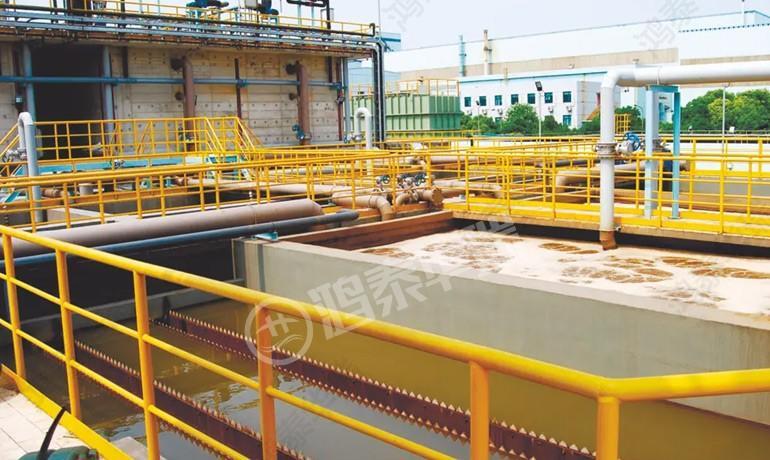
The company is a company mainly engaged in printing, papermaking and paper products, with a daily output of 40 tons of paper products. Currently, a production wastewater treatment station has been built and operated to treat the wastewater generated by the company and discharge it to meet the standards. As the production scale of the company continues to expand, the amount of wastewater produced is also increasing day by day. To this end, it is necessary to build a new papermaking wastewater reuse and treatment system to deeply treat the peel water after the original peel water treatment station has reached the standard. The recycled wood is used for workshop production, which not only realizes the recycling of water resources, but also brings certain economic benefits. The daily treatment scale of this recycled water treatment project is 1200m3. Using a combination process of high-efficiency gas-biomass cell + integrated equipment + active flash filtration, the effluent meets the company's workshop reuse water requirements. The project covers a total area of about 90m2, a total installed capacity of 93.18kw, and an operating cost of about 1.31 yuanm3 wastewater (excluding depreciation).

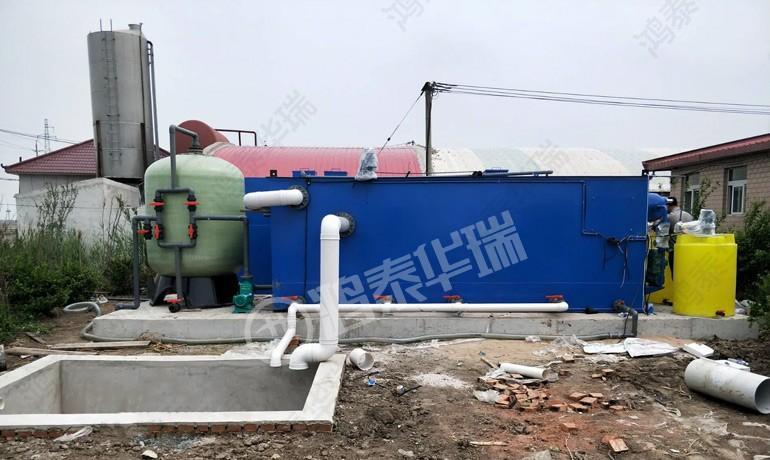
The project uses integrated reclaimed water reuse and treatment equipment with independent intellectual property rights, which integrates high-efficiency coagulation, air flotation, oxidation and filtration. The effluent water can stably meet the requirements of workshop reuse water.

Design basis

(1) Various relevant basic information provided by the owner (water quality, water quantity, reuse water requirements, etc.):

(2) On-site survey data, analysis data of on-site fruit collection water samples:

(3) "Water Pollutant Discharge Standard for Pulp and Paper Industry" (GB3544-2008):

(4) Technical Specifications for Pulp and Paper Wastewater Treatment Engineering (HJ2011-2012):

(5) "Comprehensive Sewage Discharge Standard" (GB8978-1996);

(6) Other relevant standards

Design principles

(1) Conscientiously implement the national guidelines and policies on environmental protection, so that the design complies with relevant national regulations, norms and standards:

(2) Comprehensively examine the water quality and quantity characteristics of electricity wastewater inlet and outlet, and the selected process should be technologically advanced, stable and reliable, economically reasonable, safe and applicable:

(3) Properly treat and dispose of the sludge and scum generated during the wastewater reuse treatment process to avoid secondary pollution:

(4) The automatic control system of the wastewater reuse treatment system should be convenient to manage, safe and reliable, economical and practical:

(5) The layout of the wastewater reuse treatment system should strive to be compact, reduce the floor area and investment, and the elevation layout should adopt a three-dimensional layout as much as possible to make full use of the underground space.

Source of pollution

Wastewater generated by printing paper and paper products

Processing technology

The wastewater reuse treatment process consists of four parts: pretreatment, high-efficiency aerated biological filter, integrated reuse water treatment equipment and activated carbon deep treatment, and the process flow is detailed in Figure 1.

Process diagram

Fig.1 Papermaking wastewater reuse treatment process


Handling indicators

According to the information provided by the construction unit, the design water volume is 1200m3/d。 The design influent water quality indicators are shown in Table 1.

project COD/(mg/L) Chromaticity (dilution) pH SS/(mg/L)
Influent water quality ≤400~500 ≤80 6.5~9.0 90~100

Table 1 Design wastewater influent water quality

According to the requirements of the construction unit, the wastewater is reused after treatment, and the reused water must meet the water requirements of the production workshop, and the specific water quality index requirements are shown in Table 2.

project COD/(mg/L) Chromaticity (dilution) pH SS/(mg/L)
Reuse water quality ≤120 ≤50 6.5~7.5 ≤100

 Table 2 Water quality requirements for reuse water in production workshops

Project construction drawings

the overview of this text: