Breeding sewage treatment is generally divided into five I sequences: pretreatment, anaerobic fermentation, hypoxic aerobic treatment, chemical precipitation, and deep treatment, and some or all of the processes are selected according to the environmental conditions around each cattle farm and the discharge standards formulated by the environmental protection department.
1) Pre-treatment
Pretreatment is mainly solid-liquid separation, because the sewage contains a large amount of manure and feed, the suspended solids in the sewage are very high, and these suspended solids are organic components, which can be used as fertilizer, and have a certain economic value.
Of course, there are also some that do not carry out solid-liquid separation, and all manure is anaerobic fermentation and will be generated by biogas, which can not only meet the needs of the farm for its own use, but also can be connected to the grid for takeaway, and can also produce certain economic benefits. However, the difficulty of sewage treatment and engineering investment will be greatly increased.
2) Anaerobic fermentation
The purpose of anaerobic fermentation is mainly to remove organic matter from sewage, about 80% of organic matter can be removed in this process, and the anaerobic fermentation process mainly includes UASB, USR (biogas fermenter), black film digester.
3) Hypoxic-aerobic treatment
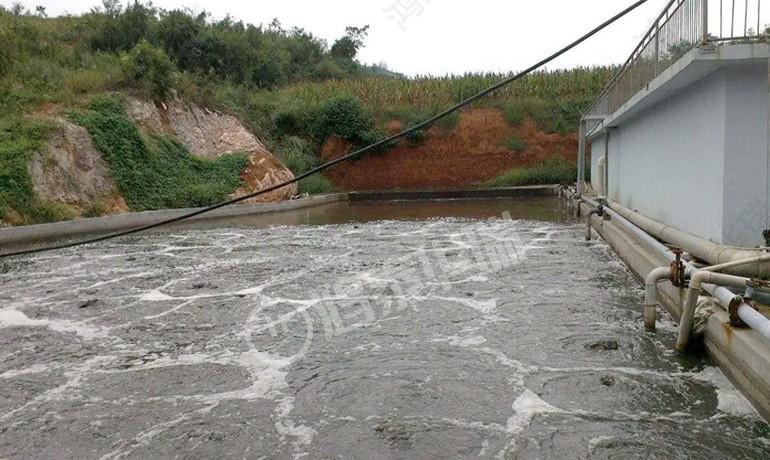
Due to the high level of ammonia nitrogen in the sewage of cattle farms, the removal effect of conventional aerobic processes is limited, and the combined process of hypoxic aerobic processes must be used to remove nitrogen in sewage.
4) Chemical precipitation
In addition to organic matter and ammonia nitrogen, the content of phosphorus is also relatively high in the sewage of cattle farms, and it is difficult to meet the standard of conventional biochemical treatment sequence I, so chemical phosphorus removal agents must be used to ensure that phosphorus meets the standard.
5) Deep processing
Deep treatment is generally biological oxidation pond or constructed wetland, of which the effect of constructed wetland is better, but the investment is also much higher, if you want to meet the comprehensive sewage discharge standard, it is recommended to use constructed wetland, if you only meet the sewage discharge standard of the breeding industry, the use of biological oxidation pond can save a lot of investment.


 hthrjt2017@gmail.com