How to do intelligent transformation of sewage plants? Hongtai Huarui FFyhoneOS solves the three major breakpoints of "people, vehicles and machines"
- release date: 2026-04-27 16:26:21
- author: Hongtai Huairui
- Reading: 764
- key words: FyhoneOS/ Hongtai Huarui / Smart Transformation of Sewage Plants / Wastewater Treatment / Human-Machine-Vehicle Collaboration / Remote Management and Control / Unmanned Delivery / Intelligent Equipment / Unattended Operation / Smart Dosing / Precise Chemical Control / Chemical Management / Multi-Site Operation / Cost Reduction and Efficiency Improvement / Stable Effluent / Sewage Station Renovation / Free Diagnosis / Investment Promotion and Agency / Regional Cooperation
The wastewater treatment industry is being forced to restructure under real-world pressures. Rising labor costs, unattended remote sites, uncontrolled chemical inventories, and poor dosing accuracy of equipment—stacked together, these issues have left many wastewater treatment plants trapped in a “busy but ineffective” cycle.
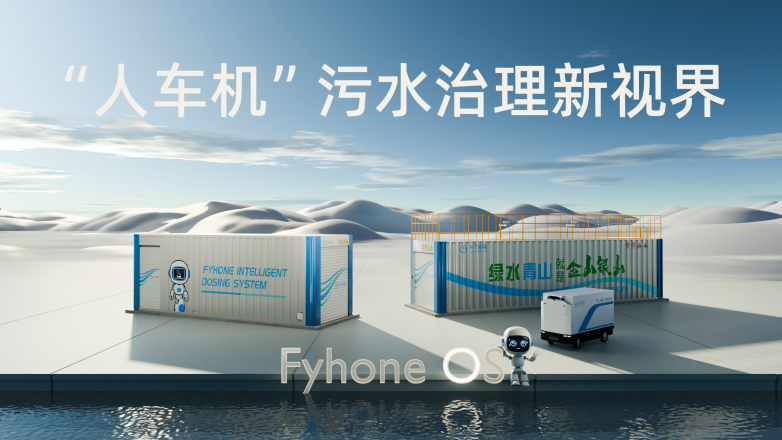
Hongtai Huarui has launched the FyhoneOS, creating a new human-vehicle-machine ecosystem for wastewater treatment. It targets the three most painful bottlenecks in the intelligent transformation of wastewater plants and provides solutions one by one.
Human: Remote management and efficient decision-making without on-site visits
The traditional management logic of wastewater treatment plants is: where the people are, management follows. Multi-site operations, projects in remote areas, and insufficient night-shift personnel—once these situations arise, management begins to lose control.
The FyhoneOS reverses this logic: administrators do not need to go on-site; on-site issues proactively come to the administrators.
All inflow and outflow water quality, equipment operation status, chemical levels, and alarm information from all sites are consolidated into a remote management platform. Both PC and mobile terminals display the same information. When the system detects abnormal water quality, it not only issues an alert but also generates a handling recommendation, assigns a responsible person, and records the resolution process. Management can make scheduling decisions from thousands of miles away, ensuring operational efficiency is not reduced by distance.
In practice: After connecting 36 township wastewater stations in Bazhong, Sichuan to FyhoneOS, four people in the central control room can cover all sites.
Many clients tell us: centralized operation of multiple sites using FyhoneOS allows the same number of management personnel to cover more sites. This is the most direct return on investment in the “human” dimension of smart wastewater plant transformation.
Vehicle: Unmanned delivery, chemicals and supplies provided on demand
Chemicals are the largest variable in wastewater plant operating costs. Carbon sources, PAC, PAM, disinfectants—inventory management and delivery in traditional models rely heavily on manual judgment. Stock levels are estimated by sight, replenishment timing is based on experience, and delivery routes are coordinated by phone. The result is either overstocking and waste or stockouts causing process fluctuations.
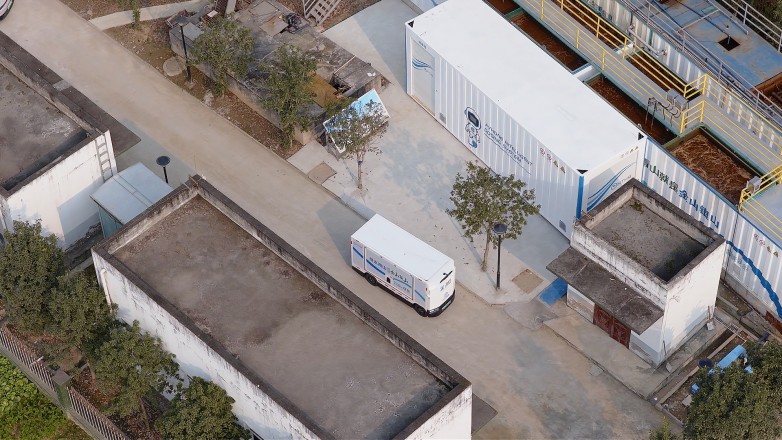
The FyhoneOS integrates unmanned delivery. Chemical delivery and supply replenishment are fully intelligently scheduled. The system monitors the chemical consumption rate and inventory level at each site in real time. When inventory approaches the warning threshold, a replenishment order is automatically generated. Optimal delivery routes are planned and executed by unmanned delivery vehicles according to the schedule. The entire process requires no manual reminders or driver experience. Delivery records are automatically archived, forming a complete material flow ledger.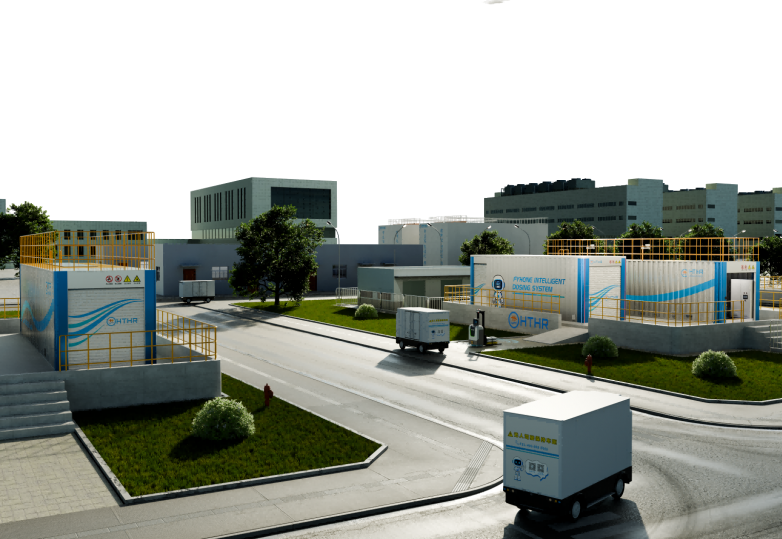
On-site, we found: previously, manual chemical delivery occurred twice a week, often leading to stockouts or overstock. After switching to FyhoneOS’s unmanned delivery, delivery frequency dropped to once every five days, but inventory turnover increased. Stockouts that could cause effluent standard violations no longer occur.
This step is not just about saving labor. It transforms chemical supply from “reactive” to “proactive,” fundamentally eliminating process risks caused by stockouts.
Machine: Intelligent equipment, precise treatment replaces rough dosing
The effectiveness of wastewater treatment ultimately depends on the equipment. The FyhoneOS covers the equipment layer, with two core types: integrated wastewater treatment equipment and intelligent dosing equipment.
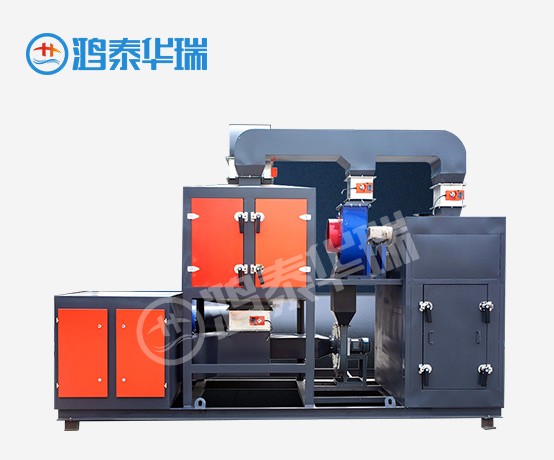
Integrated wastewater treatment equipment highly integrates biochemical treatment, sedimentation, disinfection, and other process units. It is especially suitable for decentralized wastewater treatment scenarios. It has a short installation cycle and small footprint. Projects like rural wastewater treatment or industrial park auxiliary treatment can be implemented quickly. Built-in sensors in the equipment are directly connected to the FyhoneOS. Operational data is uploaded in real time, and abnormal conditions trigger automatic alarms, eliminating the need for dedicated personnel.
Intelligent dosing equipment solves accuracy issues. Traditional dosing relies on operator experience. When personnel change or influent water quality fluctuates, dosing often becomes uncontrolled, resulting in chemical waste or effluent violations. The FyhoneOS dynamically calculates dosing based on real-time water quality data and drives intelligent dosing equipment to execute automatically. Dosing accuracy changes from “approximately suitable” to “real-time matched.”
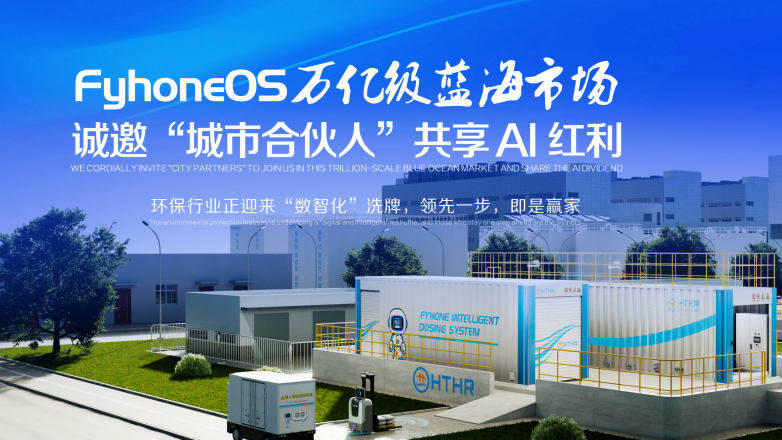
The true value of Hongtai Huarui’s FyhoneOS emerges when the three work together
Individually, human, vehicle, and machine improvements are enhancements, but they do not yet achieve a qualitative transformation. The FyhoneOS’s value lies in connecting all three into a complete process. Intelligent equipment senses water quality changes, triggering responses on the remote management platform, which simultaneously drives the unmanned delivery system to replenish chemicals, then the intelligent dosing equipment executes precisely. Each step’s output becomes the input for the next.
The result of this integrated process is: a wastewater treatment plant can achieve more stable effluent quality, lower chemical consumption, and fully traceable operational records with minimal human intervention. This is not merely an optimization of traditional operations—it is a complete rewrite of operational logic.
Is your wastewater treatment plant suitable for this kind of transformation?
Hongtai Huarui offers free on-site diagnostics for operators aiming to advance smart wastewater plant operations. Evaluations are conducted from three aspects: personnel management efficiency, delivery system vulnerabilities, and equipment dosing accuracy, to identify improvement opportunities. FyhoneOS integration plans are tailored to actual needs without requiring full-scale procurement, focusing on practical problems.
The FyhoneOS is now officially open for investment. Agency, cooperation, and regional exclusivity are all negotiable. Technically robust and aligned with policy incentives.


 hthrjt2017@gmail.com